Motivation

20230119 093115 e1674143826146

Writing When You\’re Stuck

Thanks for the great discussions about “Writing When You’re Stuck” with the Write On! authors last night. We discussed how to tackle these common writing problems: – Don’t know how to start? – Don’t know what to write? – Trouble with a difficult topic? – Stuck on page 1, chapter 1? I shared with the group three things that help me when I have writer’s block or when I just need to get motivated. First, I watch the 2000 movie Finding Forrester with Sean Connery and Rob Brown. Second, I write whatever I am thinking or feeling at the time, even if it’s not the topic of the project at the time. I save whatever I write without judging at the time if it’s good or bad. Third, if one and two don’t work, I take a break. Good luck with YOUR writing!

Writing When You\’re Stuck Read More »

motivationally small

Book Excerpt: Motivationally Intelligent Leadership

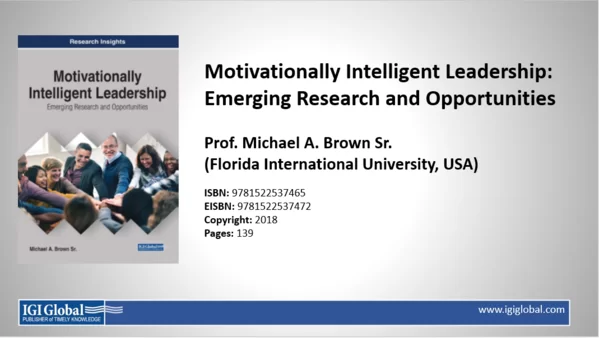
This excerpt is from my work on motivationally intelligent leadership. You can purchase relevant chapters by selecting the link “Access This Chapter” at the bottom. Book Excerpt, Chapter 3, Page 34 The leader’s emotional intelligence can be viewed in terms of six leadership styles. They are coercive, authoritative, affiliative, democratic, pacesetting, and coaching (Goleman, Boyatzis et al., 2013, Girma, 2016). Leaders who can deal with disasters are coercive, and leaders who can engineer a turnaround are authoritative. Affiliative leaders can compromise to build team harmony and morale. Democratic leaders give their people a voice in decisions. Pacesetting leaders can define and exemplify high performance standards, and coaching leaders are supportive of the development of skills. No one style is best, because as leaders, master each of these styles, they gain additional power to shape employee performance and organizational climate (Girma, 2016). Mastery of these styles is what we call “leading.” SOURCE: The relationship between leadership style and employee job satisfaction study of federal and Addis Ababa sport organizational management setting in Ethiopia (Girma, 2016). Access This Chapter!

Book Excerpt: Motivationally Intelligent Leadership Read More »

right fit leading info series small

Right Fit Leading: Motivation

Just sharing some motivation quotes that are in my collection. I have used these and others before and during games with the teams I have coached. You have to expect things of yourself before you can do them. Michael Jordan Do not let what you cannot do interfere with what you can do. John Wooden The minute you start talking about what you are going to do if you lose, you have lost. George Shultz You can become a winner only if you are willing to walk over the edge. Damon Runyon What is your favorite motivational quote?

Right Fit Leading: Motivation Read More »

right fit leading info series

Don\’t Wait For The Exit Interview

Do not wait to learn vital information about your employee during the exit interview. Instead, at least once a year after appraisal time, ask these questions. Start out by telling the employee that you may not be able to achieve what they tell you, but that you want to understand what the future looks like to THEM! Do not ask them how they like their boss or what they think of the organization. Find out what they WANT FOR THEMSELVES. This information is available today; right now. But we often wait until the exit interview to understand people’s motivation. I will soon be changing jobs with mixed feelings. The supervisor I am “leaving” always had conversations throughout the year about what I wanted to do and where I wanted to do it. It is very hard to leave that supervisor but a challenge I cannot pass up has presented itself! I enjoyed the organization, but it does not have “the next thing” I need to fuel my career motivations. This great supervisor talked to me all along and knew what I was searching for. She and I will not need an exit interview.

Don\’t Wait For The Exit Interview Read More »

3d wristbands small

3D Mentoring: Applying the 3D Principle

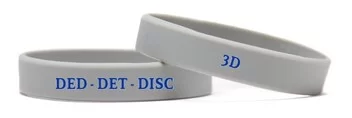
Lead the 3D way! Leading is about building strong relationships, bonding, and inspiring members to achieve trust and shared understanding. Applying the 3D principle can lead to increased personal and professional growth, improved productivity and performance, and innovation. Dedication: Commit to prepare and perform, motivating every step of the way. Detail: Create shared understanding to enhance strengths and improve weaknesses. Discipline: Follow rules to be the best you can in all situations at all times. There are tactics you can use that will ensure you are applying 3D. You do not need a class to get started because all of these actions are totally in your control, every day. They are: Speak your mind. Say what is on your mind to ensure that your contribution is heard. Big or small, your point matters. Measure twice, cut once. My best friend can build anything, and he would always say this. Do your research, pay attention to the available feedback, gather differing views, and then decide your point of view or position. Then refer back to “speak your mind.” Be yourself. If you let yourself be natural, you do not need a manual or instructions. We all have weaknesses and strengths, but you deserve to have people know and understand the real you. This will serve you well, especially in stressful situations. Focus on you. Surround yourself with people you value. Period. Focus on you. Surround yourself with people who value you. Period. If you want to learn more, just reach out to Doc Brown at drbrown.rfc.llc@gmail.com.

3D Mentoring: Applying the 3D Principle Read More »

small steward masweneng uivjlq q5g8 unsplash

50 and Over? What Can Work Mean?

As an older worker, I have been doing some fact-finding about companies that might hire people 50 and over. One reference, for instance, Companies Embrace Older Workers as Younger Employees Quit or Become Less Reliable, suggests that companies are looking to become more age-inclusive. To do that, they are considering flexible work schedules, sabbaticals, and retraining for older workers. As one can see from many of the objections to the use of telework, this could be a non-starter for many companies. In addition, it does not help a worker who is not after a flexible schedule and who has been training for years for that NEXT great job. Another article, Reasons to Hire Workers Over 50, gives some positive views and approaches to hiring older workers. It lists experience, confidence, reliability, and even happy viewpoints when discussing the virtues of the “older” worker. The problem is the lack of connection between the searching employee and the person who can actually grant an interview and bestow the job. Now, I realize this “connection” issue is not unique to older workers, but it exists as one of the challenges we face. Even an article in the Wall Street Journal was insightful: The Secret to Getting a Better Job after 50. While it started out talking about understanding the environment and addressing ageism head on, the follow up to the end of the article was less than I hoped. It talked about dressing up your resume and ways to get a more youthful look. My resume is fine and I do not mind looking my age. My sense at this point is that employers and programs might have a focus on older workers who are looking for a slower pace or a temporary job, but not for those of us who are still hungry to contribute. I may be wrong. If you wish to share your thoughts or information with me, you can respond here, or you can take my 8-question survey here. It should only take about 2 minutes of your time. I am looking forward to learning more about what the world of work holds for those 50 and over. Thanks.

50 and Over? What Can Work Mean? Read More »

3d partial cover small

3D COACHING: In Search of Excellence

The key to success is knowing your people. Work with them to find a challenge that can help them grow and prosper. Challenging people is important to motivating them. You want them to strive for something more than they think might be possible. You want to allow them to be creative in that pursuit, because that allows them to think outside the box. They may perform better than ever with this kind of freedom. Success is achieved by energizing people to give the effort and enthusiastically support the team, sometimes having to put their personal desires on the back burner. The leader’s job is to allow those personal desires to be part of the goal, so everyone gets something that they value. You may find that this approach leads to people being ready, willing, and able to put even grievances aside for a common goal that is personally and professionally rewarding. This is when you know you have created an effective team.

3D COACHING: In Search of Excellence Read More »

photographer

3D COACHING: So Many Gifts

I am fortunate because coaching delivers so many gifts. I met Luke Christensen about 3 years ago when he asked me if he could take photos of my football team’s games. Before I knew it, I saw him taking photos at many sporting events. Fast forward to Luke the professional photographer. In true 3D fashion (Dedication, Detail, Discipline), his business is growing and he’s adding education to his resume. I was very happy to hear from him this week. “Yesterday had been 2 years since I started doing sports photography officially. Just wanted to say thank you again! That was the door opener to a career for me. From that moment I knew I wanted to do sports photography. I am now shooting for college and team (opportunities), and I leave for college in June. You can check out my work here! 

3D COACHING: So Many Gifts Read More »

img 1

Right Fit Leading: Engagement is the Key

A few days ago, I had the opportunity to comment on an article about taking a leader assessment. This was an article titled “How to Spot an Incompetent Leader.” It focused in part on the importance of a leader taking a personal assessment to determine their effectiveness. This was an engagement article, and my initial comments were about combining a personal assessment with an assessment by those you lead. It’s important to find out what they want, what they like, what makes them tick, and incorporate that into the way you lead them. Sometimes you can\’t find a fit, but that too is a growth opportunity. I have a running joke with someone who worked for me before. I always say, “I get you,” to let that person know that I’m listening and I’m trying to maintain our shared understanding. Engaging your team members and working to include their desires as part of your organizational goal, where possible, can bring success. This focus can provide great benefits in terms of enriched employees who are loyal and who want to stay with the organization.

Right Fit Leading: Engagement is the Key Read More »

people 2344401 340

Right Fit Leading: Trust, Train, and Communicate

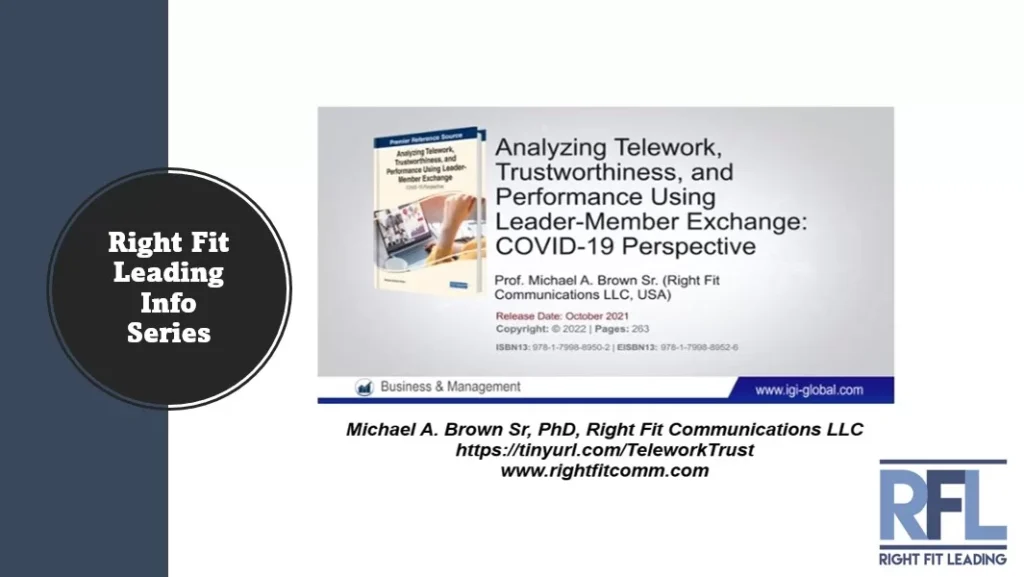
I just read a telework article about how bosses don’t trust workers. Despite current statistics that say otherwise, the article said that most bosses think that workers are not as driven or committed as the office staff. COVID has shown instances where the driven workers are just as driven when they work from home; maybe more so. Leaders have the responsibility to trust, train, and communicate with their employees whether they are onsite or not. But to generalize people into driven and non-driven buckets is not fair. Everyone has some of both in them. The key to true leadership is partnering with people to show them how to be driven more often and to be lethargic less often. This has truly little to do with where they sit when they are in either condition. I argue that people can be driven while working from home. They do not have to come to the office to be high achievers. For instance, an article by an Upwork chief economist is useful in assessing the future of telework (Ozimek, 2020). The author analyzed what we already know; there was a forced movement to remote work generated by COVID-19. The study investigated the current state of remote work and drew conclusions about the long-term impacts. Upwork looked at a combined 1,500 hiring managers to get answers. Executives, vice presidents, and managers shared their views and plans that guided their remote work decisions. “One third of hiring managers found that productivity had increased as a result of remote work, a greater share than found productivity decreased (Ozimek, 2020, p. 2).” Finally, the Upwork study signals opportunity to convince more leaders to accept and support remote work. Upwork’s survey demonstrated that remote work had gone better than expected as reported by 56% of hiring managers. Only one in 10 reported remote work had gone worse than expected. It is interesting to note that the Upwork study demonstrates that despite many responses about why remote work worked poorly, there is optimism that productivity has increased and will continue to do so. Some of the problems reported in the survey were technological issues (36.2%), increased distractions at home (32.0%), reduced team cohesion (30.5%), difficulties in communication (30.3%), teams are less organized (23.3%), and less productivity (22.5%). Only 14.8% of respondents reported no issues. However, 32.2% of hiring managers reported an increase in productivity as opposed to only 22.5% who reported a decrease. The author states, “That one third finds remote work increases productivity, despite the rapid pace of change and struggles with technology, is a very optimistic result for future adoption and future productivity (Ozimek, 2020, p. 5).” The other thing I noticed while reading the telework article the other day is that one person who commented said that most people don’t work hard or have initiative. His comments also included that physical oversight is needed to get most people motivated when the boss can’t see them. While I disagree with this point of view, the person made one statement with which I concur. A tangible deliverable is needed to get results. My point is that people can do equally well meeting that tangible deliverable whether they are at home or at work, and whether they are in sight or out of sight of the boss. I can stall you just at well while you’re watching me as I can while you’re not. These are issues of trust and control. How much trust is present and how much control is exerted. A good working relationship can have trust between supervisors and employees, and tangible deliverables and accountability can mitigate or alleviate control issues. Leaders who think their employees don’t work hard or have initiative should look in the mirror and assess their leadership approach. Remember, you hired them and they are your responsibility to train, communicate with, and nurture. Ozimek, A. (2020). The future of remote work. Available at SSRN 3638597. https://papers.ssrn.com/sol3/papers.cfm?abstract_id=3638597


Right Fit Leading: Trust, Train, and Communicate Read More »

0